

Best Entry-Level Mirrorless Cameras 2026: Subject Tracking, IBIS, and Lenses Explained
Subject-tracking is a game-changer that can be worth the higher price tag

I’m asked this question all the time: “What’s a good entry-level camera?” The truth is, there’s no simple answer. If there were, I would just send you a product link. If price is your sole criterion, then a used DSLR might be the way to go. However, we live in a world where every camera manufacturer is prioritizing mirrorless cameras. As the name implies, a mirrorless interchangeable lens camera lacks the reflex mirror and optical viewfinder system found in traditional single-lens reflex (SLR) cameras and their digital counterparts, the DSLR.
I’m a big fan of mirrorless cameras for several reasons. The sensors today are fantastic, especially when it comes to low light. The electronic viewfinders (EVF) might feel a bit different at first, but they give you a real-time histogram that makes it easy to see and tweak your exposure. In fact, mirrorless cameras are probably the best option for beginners because of this feature alone—they take the guesswork out of learning how to expose your photos. But mirrorless cameras also have another advantage that really sets them apart from DSLRs: their autofocus tracking systems.
The Remarkable Technology Inside Mirrorless Cameras
Modern mirrorless cameras have quietly pulled off something remarkable. Autofocus technology that once lived exclusively in $3,000+ professional bodies, the kind used by sports photographers and wildlife shooters, has trickled down to cameras you can buy for under $1,000. If you’ve been frustrated by missed shots, blurry pets, or out-of-focus action, the problem probably isn’t you. It’s that older or cheaper cameras simply couldn’t track a moving subject the way today’s mirrorless cameras can. That’s because newer mirrorless cameras offer two things a DSLR cannot: a full-frame detection area and AI-based subject detection. Combined, these two features make AF in today’s mirrorless cameras truly superior to even the best DSLR focusing systems.
If you’ve decided you want to get into serious photography for the first time, or upgrading from a smartphone or basic point-and-shoot, this guide is for you. I’ll walk you through what AI subject detection actually means, how the major camera systems compare, why your lens ecosystem matters as much as your camera body, and how to match all of it to the way you actually shoot. The good news is that practically all of today’s mirrorless cameras, even the entry-level ones, are very good. The discriminators go beyond price point, and that’s what this article is meant to discuss.
What Is AI Subject Detection AF, and Why Does It Matter?
Autofocus systems have come a long way from the days when a camera simply looked for the nearest object with strong contrast and assumed that was your subject. Modern mirrorless cameras use Deep Learning AI, the same class of technology behind facial recognition on your phone, to actually “understand” what’s in the frame. Instead of detecting edges and contrast patterns alone, today’s cameras are trained on millions of images to recognize specific types of subjects: a human face, a bird in flight, a racing car, the eye of a dog. When the camera recognizes one of those subjects, it locks onto it and keeps it in focus even as it moves, turns, or is temporarily obscured.
Why This Matters for Beginners in Particular
Experienced photographers can compensate for limited AF systems with technique, anticipating movement, pre-focusing, and using back-button focus. Beginners don’t have those instincts yet. A camera with strong subject detection effectively acts as a skilled assistant, handling the “where do I focus?” question so you can concentrate on composition, timing, and light. The practical difference is striking: a camera with eye detection will keep a portrait subject’s eyes sharp even as they turn their head, bird detection will grab a heron lifting off a riverbank before you’ve consciously registered that it’s moving, and vehicle tracking will hold focus on a motorcycle through a corner. These aren’t minor refinements. They’re the difference between consistently sharp images and a memory card full of near-misses.
Trust me on this. When I got my first camera with AI subject-tracking (Nikon Z9), I was absolutely gobsmacked. My bird photography became so much easier because I wasn’t fighting the AF system to stay locked on my subject. Focus became almost a given, and I could concentrate on composition and exposure.
The Subject Detection Hierarchy
Not all cameras offer the same range of subject types. They tend to expand outward in this order, from most to least common:
People: face and eye detection; the baseline for almost every modern camera
Animals/Pets: dogs and cats (or animals that resemble them)
Birds: often a separate category from general animals due to the unique challenge of tracking fast, erratic fliers. Many bird-detection algorithms also include eye detection. Bird AF can sometimes track objects and animals that resemble birds, like insects.
Vehicles: cars, motorcycles, trains, aircraft; varies widely by how granularly the camera breaks these down
Insects: the most niche category; only a handful of cameras include it
Other: drones, sports figures in action, and similar subjects
A camera that only detects people will frustrate you the moment you try to photograph your dog, a bird at a feeder, or a car at a track day. Before buying, it’s worth honestly asking what you’ll actually photograph and then checking whether the camera’s detection suite covers it. If wildlife and sports/action photography aren’t your thing, an older camera will work just fine and save you some money in the process.
Face Detection vs. Eye Detection: What’s the Difference?
Face detection finds and tracks a human or animal face as a region. Eye detection goes further, locking onto the specific eye within that face for even more precision. For portraits, eye detection is transformative. For bird photography, it’s a game-changer: no more shots where the wing is in focus instead of the bird’s head. Eye detection is the difference between a face that’s generally sharp and a portrait where the eye is tack-sharp and three-dimensional. Some cameras are even smart enough to lock onto the subjects closest eye! Most modern entry-level cameras offer both face and eye detection, but the quality of eye detection varies significantly between models and brands, particularly in how well it holds lock and how quickly it reacquires after a blink or a turn of the head.
The Five Systems You’ll Choose Between
Choosing a mirrorless camera means choosing an ecosystem, a mount standard shared by a family of lenses, accessories, and future camera bodies. Once you invest in several lenses for a particular mount, switching systems becomes prohibitively expensive (I’ve done this, but that’s a different story). Understanding the five main systems before you buy is more important than obsessing over any single camera spec.
The cameras in this guide span four different sensor and mount systems:
Canon RF-S (APS-C sensor, RF mount)
Sony E-mount (APS-C sensor, E mount)
Nikon Z DX (APS-C sensor, Z mount)
Fujifilm X-mount (APS-C sensor, X mount)
Micro Four Thirds (4/3rds sensor, MFT mount, shared by OM System and Panasonic)
APS-C vs. Micro Four Thirds: The Sensor Size Tradeoff
The sensor is the heart of the camera, capturing the light that forms your image. APS-C sensors, used by Canon, Sony, Nikon, and Fujifilm in this lineup, measure roughly 23 to 24mm across, with a “crop factor” of 1.5-1.6x.
Crop Factor: a measure of how the angle of view compares with that of the same focal length on a 35mm format camera. For example, a 35mm lens mounted on an APS-C format camera offers an angle of view equivalent to 35mm x 1.5, or roughly the same as a 52mm lens on a full-frame camera. Depending on the system you’re using and the subjects you’re after, this can be advantageous or a hindrance.
Micro Four Thirds sensors are smaller than APS-C, measuring at about 17mm across, with a 2x crop factor, meaning a 100mm lens on MFT gives you the same field of view as a 200mm lens on a full-frame camera. This tradeoff plays out in a few key ways across low-light performance, telephoto reach, depth of field rendering, and overall body and lens size. Larger sensors generally capture more light per pixel, giving APS-C a measurable advantage in dim conditions*, while MFT’s 2x crop factor is a genuine superpower for wildlife and bird photographers who want long-reach results without the cost and weight of full-frame telephoto glass. As the name implies, the Four-Thirds sensors utilize a 4:3 aspect ratio, which is the same as most cell phone cameras, while APS-C cameras have a 3:2 aspect ratio— the same as 35mm film.
Modern noise reduction software really makes the differences between APS-C and Micro 4/3rds sensors much less in practice, provided you shoot raw and understand some basic post-processing tools.
The Contenders
The cameras I chose for this article are as follows:
Canon EOS R50 (~$679 Body Only)
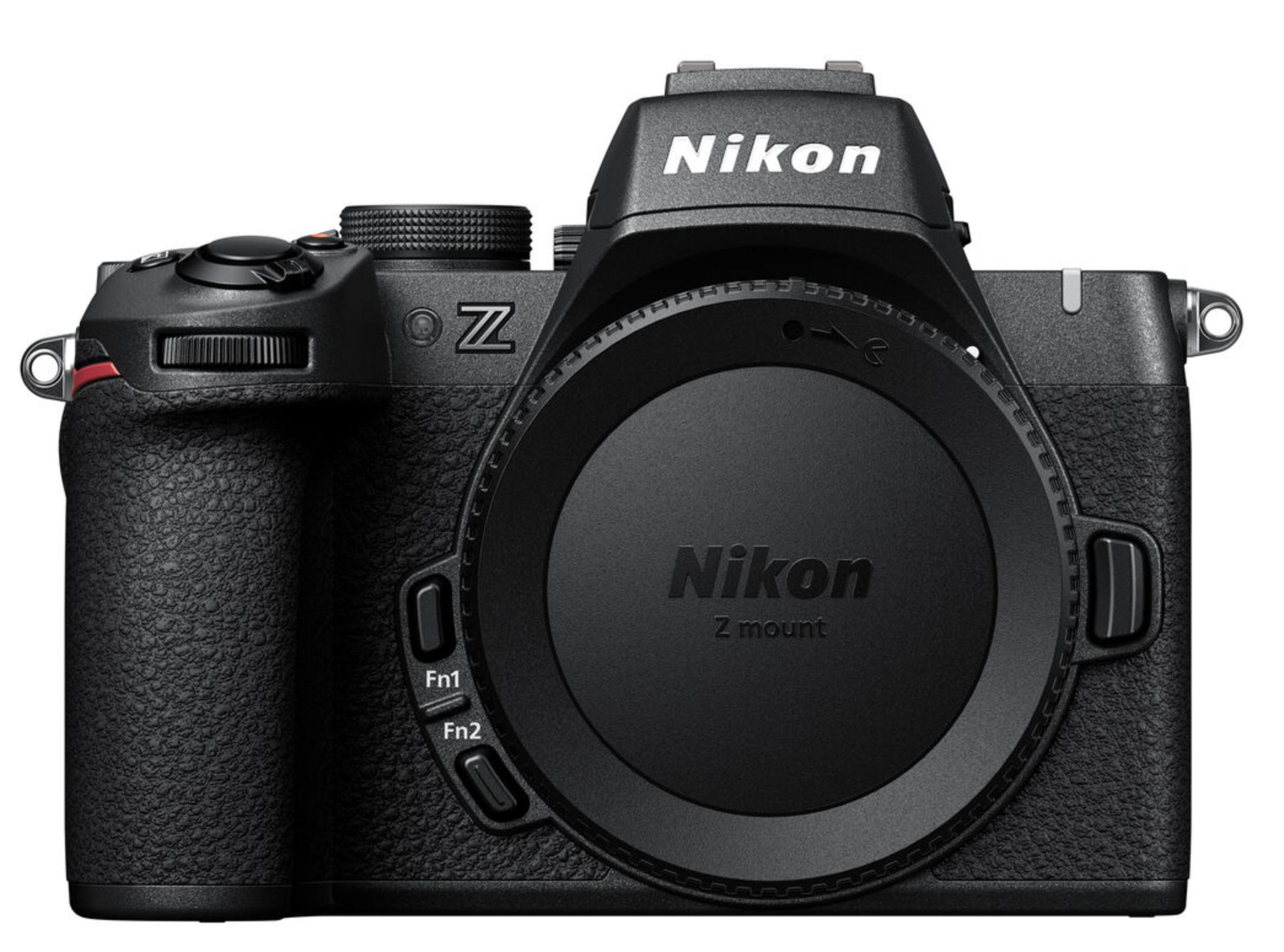
Nikon Z50 II (~$906 Body Only)
Fujifilm X-S20 (~$999 Body Only)
OM System OM-3 (~1299 Body Only)
Sony ZV E10 II (~$999 Body Only)
Sony a6700 (~$1299 Body Only)
These cameras are all great, but each has its own strengths and weaknesses, which I’ll cover in this article. While none of them are the most affordable, when you compare cameras under $1,000, you’ll notice they don’t usually have the same autofocus tracking. You might also want to think about buying used; you can often save a lot of money that way.
Beyond Price: The Features That Influence Everyday Shooting
Price is the easiest spec to compare, but it’s rarely the one that determines whether a camera feels right in your hands six months after you buy it. Stabilization, viewfinder type, and physical design are the factors most beginners wish they’d thought about earlier.
